
Retail Shift: JCPenney Closures Amid Record Holiday Sales

Key Points
- Despite a record-setting holiday shopping season in 2025 with 202.9 million consumers, major department store chains like JCPenney and Macy's continue strategic store closures.
- JCPenney is closing its Stoneridge Mall location in Pleasanton, California, by February 22, 2026, due to an inability to renew its lease and find an alternative site.
- This closure follows eight other JCPenney stores shut down in 2025 across various states, signaling a broader restructuring trend within the long-standing retailer.
- The move highlights the evolving retail landscape, where even during strong consumer spending periods, physical store profitability and optimal real estate strategies are paramount.
- The sale of 119 JCPenney properties to Onyx Partners for $947 million in 2025 underscores financial restructuring efforts following its 2020 Chapter 11 bankruptcy filing.
The Retail Paradox: Closures Amidst Booming Holiday Spending
The retail sector frequently presents a nuanced and sometimes contradictory landscape. A compelling case in point emerged recently, as the 2025 holiday shopping season registered an unprecedented level of consumer engagement. According to data released by the National Retail Federation (NRF) and Proper Insights & Analytics, a record 202.9 million consumers actively participated in shopping activities during the pivotal five-day period from Thanksgiving Day (November 27) through Cyber Monday (December 1). This figure not only surpassed the 197 million shoppers observed during the 2024 Thanksgiving weekend but also eclipsed the previous record of 200.4 million set in 2023, signaling a robust and enthusiastic consumer base. Matthew Shay, CEO of the National Retail Federation, commented on this impressive turnout, highlighting it as a reflection of a highly engaged consumer focused on value and responsive to compelling promotions, eager to make the winter holidays especially significant.
However, this buoyant start to the holiday shopping period does not universally translate into sustained success for all brick-and-mortar establishments. Paradoxically, even amidst such record-setting consumer activity, established retail giants are continuing with strategic store closures. This phenomenon underscores a deeper transformation occurring within the retail industry, where factors beyond immediate sales performance often dictate long-term viability and operational decisions.
Strategic Retrenchment: Macy's and JCPenney Lead the Way
The trend of strategic retrenchment is not isolated. Macy's, another venerable department store chain, has publicly outlined plans to close 66 underperforming stores throughout 2025, with a more extensive goal of shuttering approximately 150 locations by the close of 2026. This aggressive rationalization of its physical footprint is indicative of a broader industry imperative to optimize portfolios and divest from less profitable or strategically misaligned assets.
Similarly, JCPenney, a department store chain with a rich history spanning 123 years, has been actively engaged in its own series of closures. After having already closed eight stores earlier in 2025, the company has announced plans to close at least one more in 2026. This ongoing recalibration of its store network reflects a concerted effort to adapt to evolving market dynamics, shifting consumer preferences, and the increasing pressures of digital commerce.
JCPenney's Latest Closure: The Stoneridge Mall Example
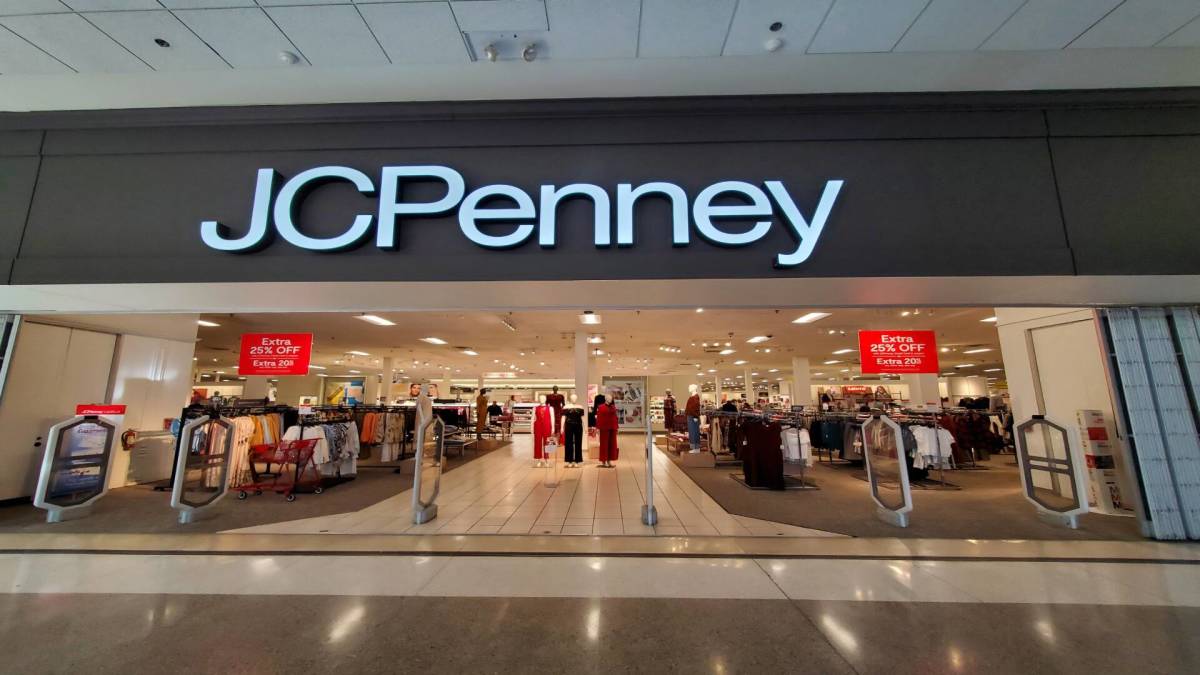
The latest closure for JCPenney involves its location at the Stoneridge Mall in Pleasanton, California. This particular store is slated to cease operations on February 22, 2026, as confirmed by reports from KRON-TV in San Francisco. The primary driver behind this decision, as stated by the department store chain, was the inability to secure a continuation of their current lease terms and the subsequent failure to identify an alternative suitable location within the Pleasanton market. This situation highlights the critical role of real estate strategy and lease negotiations in the longevity of physical retail operations. While JCPenney maintains a presence in six other Bay Area cities—including Antioch, Concord, Fairfield, Hayward, San Jose, and Santa Rosa—the Pleasanton closure signifies a targeted withdrawal from specific submarkets where operational viability or strategic alignment could not be sustained.
It is worth noting that the Pleasanton closure follows an earlier Bay Area closure at the Shops at Tanforan in San Bruno, California, in May 2025. This localized trend within a high-cost real estate market like the San Francisco Bay Area further underscores the economic pressures and strategic considerations guiding JCPenney's decisions.
JCPenney's Broader 2025 Store Closures
Beyond California, JCPenney executed seven additional store closures in 2025 across a diverse geographical spread. These locations included:
- Shops at Tanforan in San Bruno, Calif.
- The Shops at Northfield in Denver
- Pine Ridge Mall in Pocatello, Idaho
- West Ridge Mall in Topeka, Kan.
- Annapolis Mall in Annapolis, Md.
- Asheville Mall, in Asheville, N.C.
- Mall at Fox Run in Newington, N.H.
- Charles Town Center in Charlestown, W.V.
This comprehensive list illustrates a nationwide re-evaluation of its store portfolio, targeting locations that likely underperformed or no longer fit into the company's revitalized operational strategy. Such closures, while impacting local economies and employment, are often viewed as necessary steps for long-term corporate health and sustainable growth.
Financial Maneuvers and Future Outlook
These store closures are intricately linked to broader financial restructuring efforts. In a significant transaction that closed on September 8, 2025, Copper Property CTL Pass Through Trust finalized the sale of 119 properties to the Boston-based private equity firm Onyx Partners Ltd. for a substantial $947 million in an all-cash transaction. Copper Property itself was established during JCPenney's Chapter 11 bankruptcy proceedings in 2020, specifically to acquire 160 store locations and six warehouse distribution centers. During its bankruptcy phase, JCPenney had already rationalized its footprint by closing approximately 200 stores.
Founded as The Golden Rule in Kemmerer, Wyoming, in 1902, JCPenney boasts a long and storied history in American retail. Today, the company continues to operate over 650 stores across the U.S. and Puerto Rico, employing more than 50,000 workers. The ongoing strategic closures, therefore, are not indicative of a complete retreat but rather a deliberate recalibration aimed at optimizing its extensive network to thrive in a dynamically changing retail environment. The confluence of robust consumer spending during peak seasons and continuous adjustments to physical retail footprints paints a complex picture of modern commerce, where agility, data-driven decisions, and a keen understanding of market efficiency are paramount for survival and prosperity.


