
Global Billionaires 2025: Who Reigns Supreme?

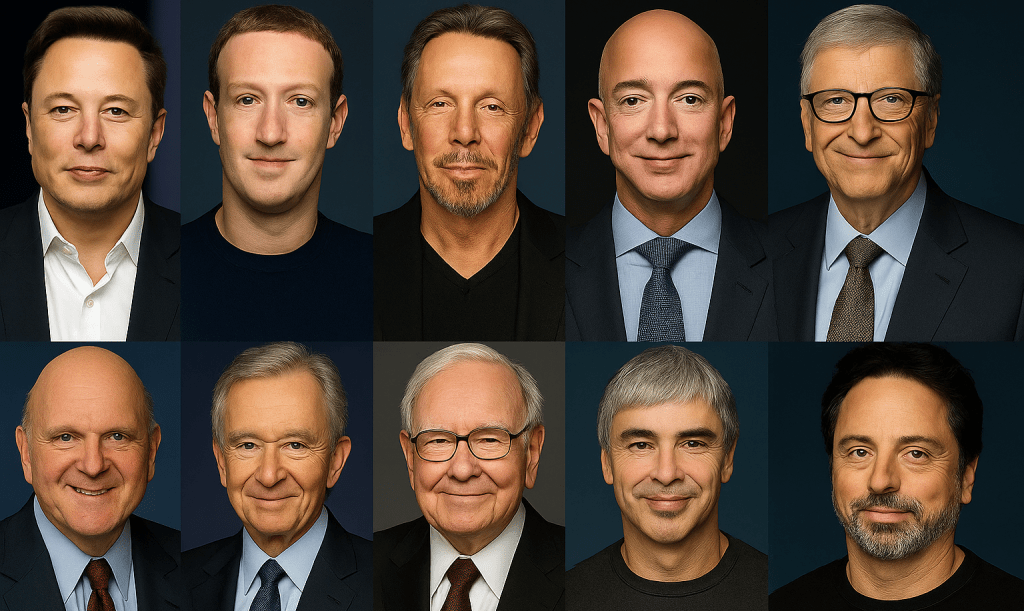
Top 100 Richest People In The World 2025
The global landscape of wealth is in a perpetual state of flux, characterized by rapid ascensions and equally swift declines. Historically, financial dominance has transitioned from Japan's real estate magnates in the 1990s to the current era of Silicon Valley's technology giants and Europe's luxury industry moguls. This dynamic shift in global wealth, often intertwined with celebrity net worth, provides a compelling reflection of evolving industrial landscapes and prevailing economic currents.
For nearly two decades, Bill Gates held the coveted top spot, a testament to Microsoft's pervasive influence. Following his reign, Warren Buffett experienced his moment at the zenith of financial power. The subsequent emergence of Jeff Bezos, who pioneered the concept of the "centibillionaire," marked a significant epoch, only to be succeeded by Elon Musk, whose disruptive innovations and ventures have fundamentally redefined contemporary wealth paradigms.
However, for every narrative of immense billionaire success, there exists the latent potential for financial downturns. This article endeavors to explore the multifaceted nature of extreme wealth, encompassing both historic pinnacles and astonishing celebrity net worth crashes. Below, readers will find the most current compilation of the world's wealthiest individuals, meticulously updated daily to reflect the continuous rise, fall, and subsequent reshaping of the global economic structure. All figures presented are accurate as of the current date and are intrinsically subject to real-time market fluctuations.
Key Points
- Global wealth rankings are highly dynamic, influenced by technology, market trends, and economic shifts.
- Technology remains the dominant sector, with a significant number of billionaires hailing from this industry.
- The United States continues to host the largest concentration of ultra-high-net-worth individuals.
- Real-time market fluctuations frequently alter individual net worths, leading to daily changes in rankings.
- Diversified portfolios across various industries like retail, finance, and commodities also contribute significantly to global wealth.
The Shifting Landscape of Global Wealth
The trajectory of global wealth accumulation is far from static, representing a continuous narrative of innovation, market adaptation, and strategic foresight. Historically, the titans of industry have evolved, reflecting the prevailing economic engines of their respective eras. From the industrial magnates of yesteryear to the digital pioneers of today, the composition of the world's wealthiest individuals offers a clear lens into the drivers of economic prosperity and disruption. The ascent of figures like Elon Musk, with his ventures spanning electric vehicles, space exploration, and artificial intelligence, underscores a modern paradigm where visionary technology and audacious ambition coalesce to create unparalleled fortunes.
This ceaseless race to the apex of the global rich list is underpinned by a complex interplay of factors, including technological breakthroughs, astute investment strategies, geopolitical stability, and consumer demand. The ability to identify emerging trends, innovate at scale, and navigate volatile market conditions is paramount for maintaining, let alone growing, immense personal wealth. Understanding these dynamics is crucial for grasping the forces that shape our global economy and determine who stands at its financial forefront.
Dominant Sectors: Technology Leads the Charge
Unsurprisingly, the technology sector continues its formidable dominance in generating and consolidating immense wealth. A substantial portion of the world's top billionaires derive their fortunes from tech enterprises that have fundamentally reshaped how we live, work, and communicate.
Technology Tycoons
Leading this charge are figures such as Elon Musk, Larry Ellison of Oracle, Amazon founder Jeff Bezos, and Google co-founders Larry Page and Sergey Brin. Mark Zuckerberg, the architect of Meta Platforms, further solidifies the tech industry's pervasive influence. Newer entrants to the top echelons, like Jensen Huang of Nvidia and Michael Dell, highlight the continuous innovation and exponential growth potential within computing hardware and AI. Even stalwarts like Bill Gates, despite his philanthropic focus, maintain significant holdings that reflect the enduring value of technological advancements. China also contributes notable tech billionaires such as Ma Huateng (Tencent), William Ding (NetEase), Zhang Yiming (ByteDance), and Colin Huang (Pinduoduo), showcasing Asia's critical role in the digital economy.
Diversified Fortunes Beyond Tech
While technology captures much of the spotlight, significant wealth is also concentrated in other vital sectors. The consumer goods industry boasts titans like Bernard Arnault, whose LVMH empire spans luxury brands, and Francoise Bettencourt Meyers of L'Oréal. The retail sector continues to create immense wealth, exemplified by the Walton family (Walmart) and Amancio Ortega (Inditex/Zara). Finance and investment have also proven to be robust avenues for wealth creation, with individuals like Thomas Peterffy (Interactive Brokers), Stephen Schwarzman (Blackstone), Ken Griffin (Citadel), and Izzy Englander (Millennium Management) making substantial impacts. Industrial giants like Gautam Adani and Charles Koch, along with commodities magnates such as German Larrea and Iris Fontbona, demonstrate the enduring importance of traditional industries and natural resources in global wealth generation. The energy sector, with figures like Mukesh Ambani and Prajogo Pangestu, further illustrates the diversified pathways to becoming a global billionaire.
Geographical Concentrations of Wealth
The distribution of global wealth reveals interesting geographical patterns, with certain nations consistently producing a higher number of ultra-high-net-worth individuals. These concentrations often correlate with robust economic growth, innovative ecosystems, and favorable business environments.
United States Dominance
The United States unequivocally remains the epicenter of global wealth, hosting the largest number of billionaires. This dominance is largely attributable to its vibrant technology sector, dynamic financial markets, and entrepreneurial culture. American billionaires span a wide array of industries, from the pervasive influence of Silicon Valley tech to traditional retail, diverse investments, and healthcare.
Asia's Rising Influence
Asia is rapidly emerging as a formidable force in the global wealth landscape. China, in particular, has seen an explosion in its billionaire population, driven by technological innovation and massive industrial expansion. India, with its growing economy and burgeoning tech and industrial sectors, also contributes significantly to the list. Indonesia, Japan, and Hong Kong further solidify Asia's increasing prominence in the global financial arena, with wealth stemming from energy, retail, and diversified conglomerates.
European and Other Regions' Impact
Europe continues to nurture substantial wealth, particularly in luxury consumer goods (France), retail (Spain, Germany), and diversified investments (Switzerland). Mexico's billionaires often derive their fortunes from telecommunications and commodities, while countries like Canada, Brazil, and Australia also feature prominently, showcasing diverse economic strengths from finance to mining. The presence of billionaires from the Russian Federation and Nigeria highlights wealth generation across various global regions, often tied to natural resources and burgeoning domestic markets.
Understanding Net Worth: Volatility and Growth
The figures presented in the global billionaire list are not static; rather, they are a snapshot of fortunes that are in constant flux, subject to the capricious nature of global financial markets. The "Total Net Worth" column provides a grand total, while "Last Change" indicates the daily fluctuation, and "$ YTD Change" reveals the year-to-date performance. These metrics vividly illustrate the dynamic interplay between market forces, investment performance, and strategic business decisions.
Some individuals experience substantial daily and yearly gains, propelled by soaring stock prices, successful ventures, or opportune investments. Conversely, others may witness significant losses due to market downturns, shifts in consumer preferences, or adverse economic conditions. This inherent volatility underscores that even at the pinnacle of wealth, fortunes are inextricably linked to the broader economic pulse, providing both opportunities for unprecedented growth and the risk of considerable contraction.
Conclusion
The roster of the world's 100 richest individuals in 2025 serves as a powerful indicator of global economic trends, technological innovation, and the relentless pursuit of entrepreneurial excellence. While the landscape is dominated by technology titans, the presence of diverse industries from retail to commodities, and finance to healthcare, underscores the multifaceted nature of wealth creation. The geographical spread further illustrates the expanding global reach of economic power.
Ultimately, this list is more than just a tally of personal fortunes; it is a live barometer of global market movements, industrial evolution, and the enduring human capacity for innovation and wealth generation. As industries continue to transform and economies evolve, the composition of this exclusive group will undoubtedly continue to shift, reflecting the ever-changing face of global capitalism.
Finance Monthly Real-Time Billionaire List
(Data as of prior trading day's close unless otherwise indicated)
| Rank | Name | Total Net Worth | $ Last Change | $ YTD Change | Country / Region | Industry |
|---|---|---|---|---|---|---|
| 1 | Elon Musk | $449B | -$11.8B | +$16.9B | United States | Technology |
| 2 | Larry Ellison | $297B | -$5.68B | +$105B | United States | Technology |
| 3 | Jeff Bezos | $265B | +$1.01B | +$26.0B | United States | Technology |
| 4 | Larry Page | $242B | -$4.70B | +$73.3B | United States | Technology |
| 5 | Sergey Brin | $226B | -$4.35B | +$67.5B | United States | Technology |
| 6 | Mark Zuckerberg | $220B | +$894M | +$12.5B | United States | Technology |
| 7 | Bernard Arnault | $191B | +$1.01B | +$15.1B | France | Consumer |
| 8 | Steve Ballmer | $171B | -$139M | +$24.7B | United States | Technology |
| 9 | Jensen Huang | $164B | +$144M | +$49.2B | United States | Technology |
| 10 | Michael Dell | $155B | -$2.29B | +$31.1B | United States | Technology |
| 11 | Warren Buffett | $150B | +$1.79B | +$8.22B | United States | Diversified |
| 12 | Jim Walton | $127B | +$609M | +$15.0B | United States | Retail |
| 13 | Rob Walton | $125B | +$586M | +$15.1B | United States | Retail |
| 14 | Alice Walton | $124B | +$598M | +$15.0B | United States | Retail |
| 15 | Bill Gates | $117B | +$282M | -$41.7B | United States | Technology |
| 16 | Carlos Slim | $115B | +$1.43B | +$35.9B | Mexico | Diversified |
| 17 | Amancio Ortega | $115B | -$162M | +$13.5B | Spain | Retail |
| 18 | Mukesh Ambani | $103B | -$1.18B | +$12.8B | India | Energy |
| 19 | Francoise Bettencourt Meyers | $88.2B | +$86.4M | +$13.8B | France | Consumer |
| 20 | Gautam Adani | $88.1B | +$259M | +$9.41B | India | Industrial |
| 21 | Thomas Peterffy | $84.2B | +$765M | +$31.0B | United States | Finance |
| 22 | Julia Flesher Koch & family | $78.0B | +$72.4M | +$4.97B | United States | Industrial |
| 23 | Zhong Shanshan | $77.3B | -$63.3M | +$22.4B | China | Diversified |
| 24 | Charles Koch | $69.9B | +$64.1M | +$4.23B | United States | Industrial |
| 25 | Ma Huateng | $69.1B | -$1.03B | +$20.8B | China | Technology |
| 26 | Jeff Yass | $60.2B | -$150M | +$14.3B | United States | Finance |
| 27 | Zhang Yiming | $59.6B | $0 | +$15.7B | China | Technology |
| 28 | Zeng Yuqun | $59.3B | +$54.1M | +$20.6B | Hong Kong | Industrial |
| 29 | Tadashi Yanai | $56.2B | +$509M | +$5.33B | Japan | Retail |
| 30 | German Larrea | $55.1B | +$451M | +$22.3B | Mexico | Commodities |
| 31 | Giovanni Ferrero & family | $54.6B | +$343M | +$18.8B | Italy | Food & Beverage |
| 32 | Stephen Schwarzman | $50.5B | +$448M | -$2.96B | United States | Finance |
| 33 | Ken Griffin | $48.3B | $0 | +$6.91B | United States | Finance |
| 34 | Eric Schmidt | $48.2B | -$815M | +$12.0B | United States | Technology |
| 35 | Colin Huang | $47.9B | -$338M | +$13.7B | China | Technology |
| 36 | Jacqueline Badger Mars | $47.8B | +$350M | +$4.66B | United States | Food & Beverage |
| 37 | John Mars | $47.8B | +$350M | +$4.66B | United States | Food & Beverage |
| 38 | Prajogo Pangestu | $47.6B | +$1.16B | +$17.9B | Indonesia | Energy |
| 39 | Jack Ma | $46.4B | -$296M | +$12.2B | China | Technology |
| 40 | Miriam Adelson | $45.4B | +$811M | +$8.19B | United States | Entertainment |
| 41 | Changpeng Zhao | $45.3B | -$528M | -$8.01B | Canada | Finance |
| 42 | William Ding | $44.2B | -$108M | +$15.4B | China | Technology |
| 43 | Abigail Johnson | $44.2B | +$186M | +$2.41B | United States | Finance |
| 44 | Lukas Walton | $44.0B | +$168M | +$5.32B | United States | Retail |
| 45 | Iris Fontbona & family | $43.6B | -$316M | +$15.0B | Chile | Commodities |
| 46 | Masayoshi Son | $43.0B | -$3.51B | +$27.2B | Japan | Technology |
| 47 | Dieter Schwarz | $42.9B | -$278M | +$11.3B | Germany | Retail |
| 48 | Alain Wertheimer | $41.3B | -$24.6M | -$3.12B | France | Consumer |
| 49 | Gerard Wertheimer | $41.3B | -$74.6M | -$3.15B | France | Consumer |
| 50 | MacKenzie Scott | $41.1B | +$36.1M | +$968M | United States | Technology |
| 51 | Thomas Frist | $41.0B | +$290M | +$13.3B | United States | Health Care |
| 52 | Zhang Bo | $40.8B | +$136M | +$20.6B | China | Industrial |
| 53 | Klaus-Michael Kuehne | $38.5B | -$108M | -$43.2M | Germany | Industrial |
| 54 | Len Blavatnik | $37.8B | +$293M | -$1.35B | United States | Diversified |
| 55 | Li Ka-shing | $37.3B | -$62.7M | +$7.40B | Hong Kong | Real Estate |
| 56 | Robert Pera | $36.8B | -$8.29B | +$16.4B | United States | Technology |
| 57 | He Xiangjian | $36.6B | -$370M | +$3.88B | China | Consumer |
| 58 | Gianluigi Aponte | $36.2B | +$84.2M | +$8.85B | Switzerland | Services |
| 59 | Lei Jun | $36.0B | -$988M | +$6.31B | China | Technology |
| 60 | Shiv Nadar | $35.8B | -$327M | -$7.29B | India | Technology |
| 61 | Ernesto Bertarelli & family | $34.4B | -$151M | +$7.75B | Switzerland | Diversified |
| 62 | Shapoor Mistry | $34.3B | -$169M | -$4.34B | India | Industrial |
| 63 | Eduardo Saverin | $33.7B | +$147M | +$1.92B | Brazil | Technology |
| 64 | Rodolphe Saade & family | $33.4B | +$715M | +$3.62B | France | Services |
| 65 | Rick Cohen | $33.2B | +$14.3M | +$18.8B | United States | Consumer |
| 66 | Savitri Jindal | $32.4B | +$130M | +$127M | India | Commodities |
| 67 | Henry Samueli | $32.2B | -$558M | +$8.57B | United States | Technology |
| 68 | Gina Rinehart | $31.3B | -$293M | +$6.29B | Australia | Commodities |
| 69 | Dan Gilbert | $30.7B | +$594M | +$4.62B | United States | Real Estate |
| 70 | Susanne Klatten | $30.6B | +$244M | +$6.30B | Germany | Industrial |
| 71 | Aliko Dangote | $30.5B | +$9.29M | +$2.43B | Nigeria | Industrial |
| 72 | Andy Bechtolsheim | $30.2B | +$90.4M | +$5.19B | Germany | Technology |
| 73 | Mark Mateschitz | $30.1B | -$224M | +$9.25B | Austria | Food & Beverage |
| 74 | Eyal Ofer | $29.9B | +$18.1M | +$3.43B | Monaco | Diversified |
| 75 | Idan Ofer | $29.9B | -$22.8M | +$1.41B | Israel | Energy |
| 76 | Phil Knight & family | $29.2B | -$332M | -$5.18B | United States | Consumer |
| 77 | Vladimir Potanin | $29.1B | -$92.6M | +$1.24B | Russian Federation | Commodities |
| 78 | Zhang Xuexin | $28.9B | +$275M | +$15.9B | China | Industrial |
| 79 | Sunil Mittal | $28.8B | -$1.40B | +$4.97B | India | Media & Telecom |
| 80 | David Sun | $28.6B | -$158M | +$14.8B | United States | Technology |
| 81 | John Tu | $28.6B | -$158M | +$14.8B | United States | Technology |
| 82 | Lakshmi Mittal | $28.4B | +$206M | +$8.76B | India | Commodities |
| 83 | Hasso Plattner | $28.4B | -$224M | +$2.59B | Germany | Technology |
| 84 | Henry Cheng | $27.8B | -$377M | +$8.82B | Hong Kong | Retail |
| 85 | Huang Shilin | $27.5B | +$11.2M | +$9.42B | China | Industrial |
| 86 | Alexey Mordashov | $27.4B | -$165M | +$4.16B | Russian Federation | Industrial |
| 87 | Liu Yongxing | $26.6B | -$310M | +$12.9B | China | Industrial |
| 88 | Jorge Paulo Lemann | $26.4B | -$66.4M | +$5.23B | Brazil | Food & Beverage |
| 89 | Stefan Quandt | $26.2B | +$302M | +$5.37B | Germany | Industrial |
| 90 | Izzy Englander | $26.1B | -$25.0M | +$12.7B | United States | Finance |
| 91 | Elaine Marshall | $26.1B | +$33.9M | +$1.31B | United States | Industrial |
| 92 | Peter Thiel | $26.0B | +$201M | +$9.91B | United States | Finance |
| 93 | Andrew Forrest | $25.9B | -$250M | +$3.86B | Australia | Commodities |
| 94 | Azim Premji | $25.5B | -$275M | -$5.37B | India | Technology |
| 95 | Vagit Alekperov | $25.5B | $0 | +$199M | Russian Federation | Energy |
| 96 | Dilip Shanghvi | $25.4B | +$50.1M | -$4.05B | India | Health Care |
| 97 | Zhang Zhidong | $25.4B | -$285M | +$6.20B | China | Technology |
| 98 | Leonid Mikhelson | $24.9B | +$53.2M | +$2.54B | Russian Federation | Energy |
| 99 | Low Tuck Kwong | $24.7B | -$18.1M | -$3.23B | Indonesia | Energy |
| 100 | Lyndal Stephens Greth | $24.4B | +$218M | -$402M | United States | Energy |
Check Out Our Latest Net Worth Articles
Every Hollywood journey feels like a power ballad — one that could have played on the same airwaves as the defining hits of the early ’80s, filled with fame, fallout, and the constant fight to start over again.
Think Kim Carnes, whose smoky 1981 hit “Bette Davis Eyes” turned vulnerability into power and earned her both Record and Song of the Year at the Grammys. Or Simon Le Bon, the ever-stylish frontman of Duran Duran, whose voice carried the band from the glossy decadence of “Rio” to the reflective grace of “Ordinary World.”
Read Next: [The Richest 1980s Boy Bands: Where the Money Went Then — and Who’s Still Earning Now]


