
Dick Cheney's Legacy: US Forever Wars & Economic Impact

The political landscape paused on November 3, 2025, as news broke of Dick Cheney's passing at 84. The former Vice President, a figure synonymous with the profound shifts in American foreign policy and national security following the September 11th attacks, succumbed to complications from pneumonia, concluding a lifetime marked by significant heart ailments. Surrounded by his wife, Lynne, and daughters, Liz and Mary, at their Virginia home, Cheney's death immediately ignited a torrent of diverse reactions—from tributes celebrating a steadfast leader to critiques highlighting the long-term repercussions of his tenure. His legacy, deeply intertwined with the "forever wars" and an assertive expansion of executive power, continues to influence contemporary discussions on governance and global strategy.
Cheney's political journey was a testament to relentless ambition and strategic acumen, beginning in Wyoming and ascending to the highest echelons of Washington. A Yale dropout who later became a Yale scholar, his early career saw him navigate the complexities of the Nixon administration by 1969. His knack for quiet but firm command propelled him through pivotal roles, including White House Chief of Staff under President Gerald Ford and a demanding period as House GOP whip. By 1989, he led the Pentagon as Secretary of Defense during the first Gulf War, an experience that further solidified his reputation as a formidable national security architect. A strategic pivot in 1995 saw him move to the private sector, taking the helm at Halliburton, an oilfield services giant, where his leadership significantly boosted the firm's fortunes. This intricate trajectory—from government insider to corporate titan and back to the highest echelons of government as Vice President—forged a vice presidency that redefined the role's influence, particularly after the tragic events of September 11, 2001.
The Post-9/11 Vice Presidency: A Redefined Executive Role
The events of 9/11 fundamentally reshaped Cheney's vice presidency, casting him as the central figure in the Bush administration's response to terrorism. His composure in the White House bunker, issuing directives while President Bush was moved to safety, underscored his resolve and set the tone for a new doctrine of preemption. This doctrine, aimed at neutralizing threats before they materialized, dramatically redrew global geopolitical lines. The swift military action in Afghanistan, targeting al-Qaeda and the Taliban, soon escalated into the protracted conflict in Iraq in 2003. This decision, based on intelligence regarding weapons of mass destruction that later proved unfounded, incurred immense human and financial costs, leaving a legacy of complex challenges that continue to echo in global affairs and public discourse today.
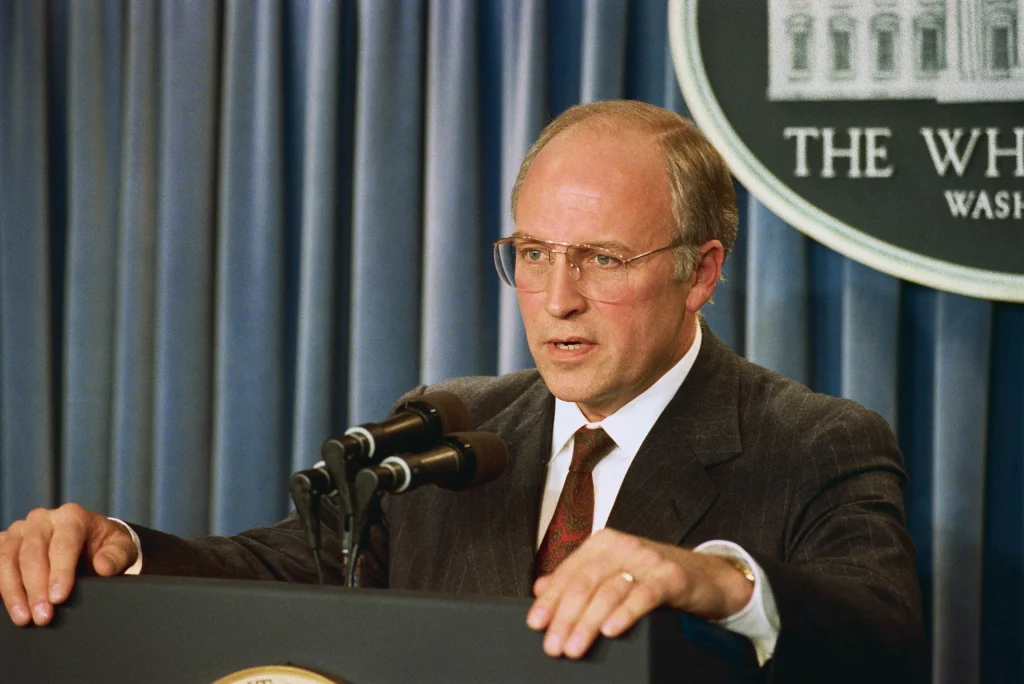
Vice President Dick Cheney delivering a speech at the White House, speaking from a podium with the presidential seal.
Controversial Policies and Executive Power Expansion
In the wake of 9/11, Cheney was a primary advocate for an aggressive expansion of executive authority, championing policies that sparked widespread national and international debate. His influence was central to the establishment of the detention facility at Guantanamo Bay, the implementation of warrantless wiretapping programs, and the authorization of enhanced interrogation techniques, including waterboarding. These measures, defended by Cheney as necessary for national security, ignited fierce opposition and rigorous scrutiny from Congress, human rights organizations, and the international community. During a 2014 interview on Meet the Press, Cheney steadfastly defended these decisions, famously declaring, "I would do it again in a minute," a statement that encapsulated his unwavering belief in the efficacy and necessity of his actions, despite the ensuing controversies and the later findings of the CIA torture report. The balance sheet of his actions remains a subject of intense discussion, lauded by some for preventing further attacks and condemned by others for undermining American values and creating long-term instability.
Personal Resilience and Political Shifts
Cheney's career was also defined by a remarkable personal resilience in the face of severe health challenges. He endured five heart attacks, eventually receiving a heart transplant in 2012, an event he credited with giving him "life itself." Despite these profound medical battles, his intellectual drive remained undimmed; he continued to engage in public discourse through book tours and media appearances well into his eighties. This physical fortitude was mirrored by his surprising political evolutions. Once a staunch Reaganite icon, Cheney became a vocal critic of Donald Trump, particularly after the January 6th Capitol attack, condemning the former president's election denial as "cowardice" in 2021 hearings. This late-career pivot reached its peak in 2024 when Cheney endorsed Kamala Harris, a move that shocked many, rallying "Never-Trumpers" but alienating a significant portion of the Republican base. His stance underscored a conservatism rooted in institutional stability rather than political upheaval. His daughter, Liz Cheney's, subsequent removal from Congress for her similar opposition to Trump further cemented their joint status as figures who, despite their past, emerged as unexpected defenders of democratic norms, a poignant narrative highlighted in yesterday's eulogies.
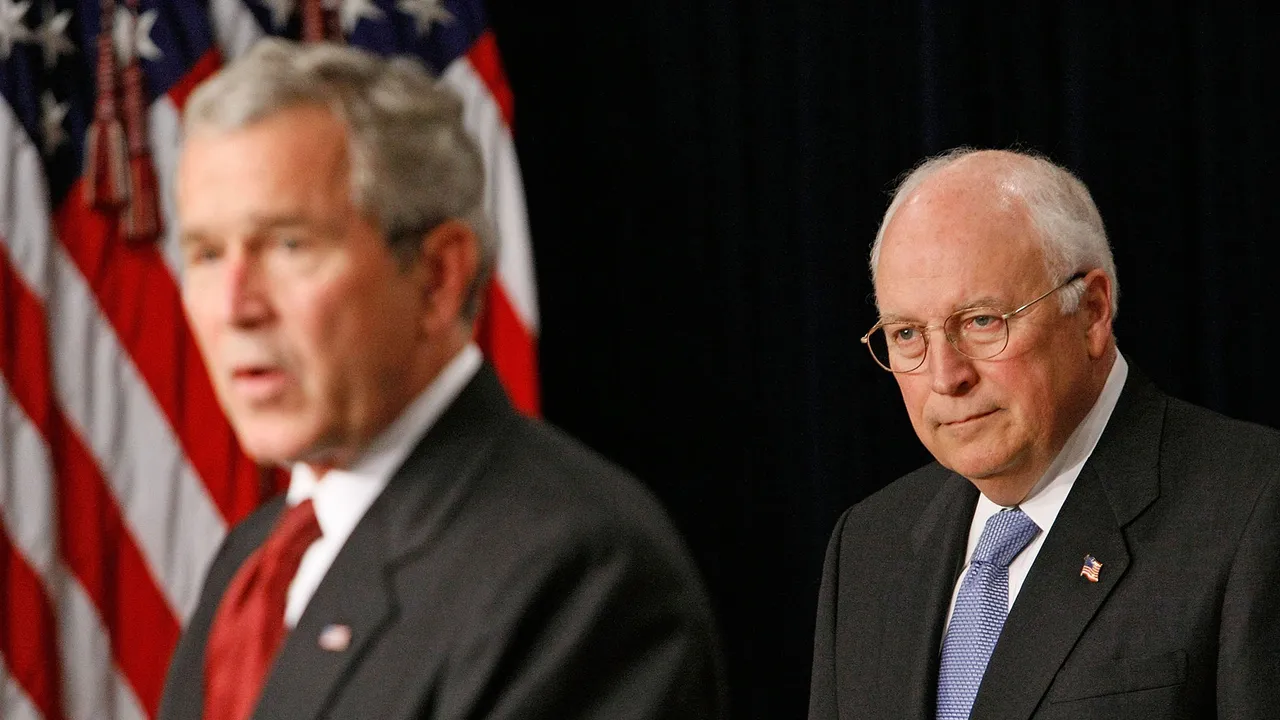
Vice President Dick Cheney observing attentively behind President George W. Bush during a White House speech.
Halliburton's Shadow and War's Economic Engine
The economic dimensions of Cheney's influence are particularly evident in his association with Halliburton. His five-year tenure as CEO saw the company's revenues triple to $12 billion through strategic mergers and expanded operations, notably in the Middle East. This period foreshadowed a significant increase in the firm's government contracts during his vice presidency. Pentagon audits revealed that Halliburton secured approximately $39.5 billion in Iraq-related contracts alone, illustrating a stark example of the "revolving door" phenomenon—where former government officials move into the private sector and profit from policies they helped shape. This dynamic significantly boosted defense stocks, with Halliburton's shares reportedly surging 300 percent post-9/11, largely due to no-bid logistics contracts. As noted by energy analyst Jim Wicklund of Bank of America Securities in 2003, such companies operate with "razor-thin" profit margins, necessitating high efficiency; however, this model often translated into substantial taxpayer outlays.
Analysis by Finance Monthly indicated that this model contributed to a 40 percent inflation in U.S. defense spending between 2001 and 2008, funneling an estimated $700 billion into contractors. This surge in spending was largely financed through borrowed war funds, accumulating national debt and increasing the average household tax burden by approximately $1,200 annually. For ordinary Americans, the implications were tangible: unchecked contractor cronyism led to increased federal spending, which could manifest as higher interest rates on mortgages, delayed Social Security benefit increases, or rising property taxes due to local bonds tied to war-era deficits. For instance, a factory worker in the Midwest might have seen her property taxes climb by 15 percent in the 2010s, a hidden cost directly linked to the extensive Halliburton contracts. Investors seeking to mitigate risk from such governmental spending volatility are advised to monitor "revolving door" filings on OpenSecrets.org quarterly. Diversifying investment portfolios away from potentially overvalued defense stocks can act as a safeguard, potentially shielding 5-10 percent of portfolio dips when major government contracts diminish, as observed in post-Afghanistan market corrections.
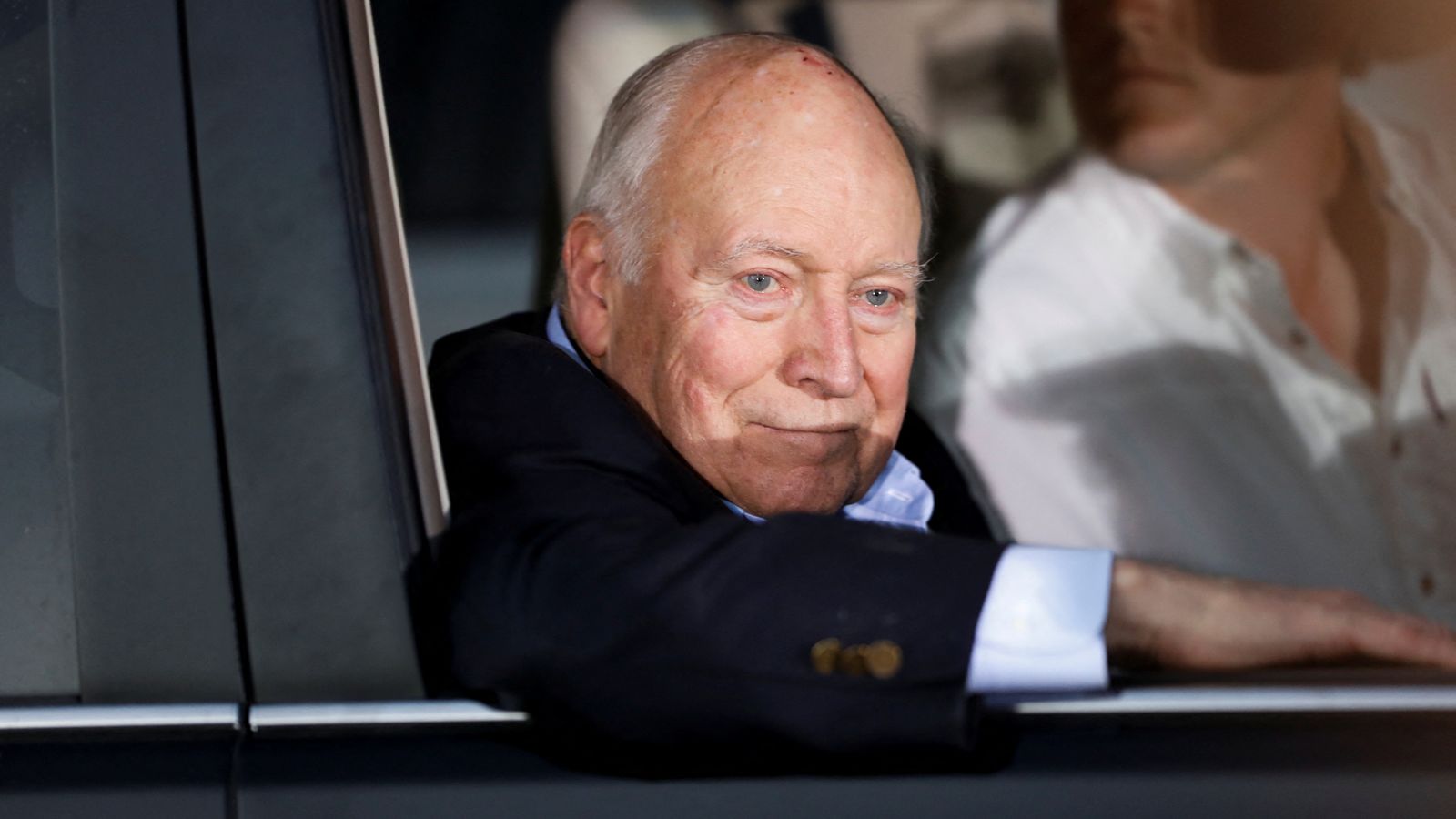
A recent image of Dick Cheney, gazing thoughtfully out of a car window, capturing a moment of reflection late in life.
Cheney's Enduring Footprint: A Nation Still Grappling
As tributes continue to cascade—including George W. Bush's statement hours after the news, describing him as "a man of profound conviction"—Cheney's departure inevitably reopens discussions on America's recent past, from the complexities of the Kabul withdrawal to the divisions exposed by the Capitol riots. He departs not as a unifier, but as an unyielding provocateur, whose strategic blueprint for assertive action continues to inform contemporary policies, from drone strikes to debates over national debt ceilings. Survived by his wife, Lynne, and daughters, Liz and Mary, Dick Cheney's legacy is one of unwavering resolve and profound impact, forever etched into the fabric of American politics and foreign policy.
Key Insights on Dick Cheney's Legacy
What Was Dick Cheney's Estimated Net Worth at His Passing in 2025?
At the time of his passing in 2025, Dick Cheney's net worth was estimated to be around $150 million, primarily accumulated from his executive compensation at Halliburton, lucrative book deals, and substantial speaking engagement fees.
Why Did Dick Cheney Endorse Kamala Harris in 2024?
Dick Cheney's endorsement of Kamala Harris in 2024 was a strategic decision aimed at safeguarding democratic institutions. He expressed deep concerns regarding Donald Trump's challenges to election integrity, viewing his support for Harris as a necessary step to protect constitutional norms, marking a significant deviation from traditional Republican alignments.
What Was Dick Cheney's Pivotal Role in the Iraq War Decision?
As Vice President, Dick Cheney played a critical and influential role in advocating for the 2003 invasion of Iraq. He was instrumental in shaping intelligence briefings and policy discussions, pushing for military intervention based on claims of weapons of mass destruction, ultimately initiating America's longest and most controversial conflict.


