
Trump's Tariff Dividend: Q4 Crypto Boost & Market Impact Analysis

The potential for a new fiscal stimulus, often termed a “tariff dividend,” is creating a significant buzz within financial circles, particularly as it converges with Bitcoin’s near-record valuation. This scenario sets the stage for a critical assessment of how high-level economic pronouncements can influence the dynamic cryptocurrency markets in the final quarter of 2025. Reports from reputable sources, including Reuters, indicate that the White House is contemplating direct rebate checks, ranging from $1,000 to $2,000 per individual. These payments, as articulated by President Donald Trump in a recent interview, are envisioned as a “dividend to the people,” to be funded directly from tariff revenues.
These discussions gain particular traction at a time when Bitcoin is consistently trading at elevated levels, approaching its all-time highs, and U.S. spot Bitcoin Exchange-Traded Funds (ETFs) continue to attract substantial capital inflows. The concept of these tariff-funded rebates initially surfaced during a One America News interview, garnering broader media attention. However, it is crucial to note that as of now, a formal legislative bill or a detailed Treasury distribution framework has not been publicly introduced, leaving many specifics open to speculation.
Americans could receive $1,000–$2,000 payouts, President Trump tells @baldwin_daniel_ , citing record tariff revenues that he says could soon hit $1 trillion a year. He says the gains will reduce the nation’s debt burden and boost growth.
Subscribe to OAN LIVE for more news like… pic.twitter.com/s0ZgsWB382
— One America News (@OANN) October 3, 2025
Market participants are actively evaluating the potential ramifications of such rebates, should they be implemented. The prevailing sentiment is that these checks could significantly bolster household expenditure and amplify the general appetite for risk-on assets during the latter part of 2025. This anticipation is reminiscent of prior stimulus initiatives, leading many to ponder if history could repeat itself regarding crypto market rallies.
Understanding the Proposed Tariff Rebate and its Economic Implications
President Trump’s articulation of the plan directly links these rebates to the proceeds generated from tariffs. This framing serves a dual purpose: partly as a measure to offset the financial burden of tariffs on consumers, and in some interpretations, as a mechanism to alleviate the national debt. Historically, Treasury officials have often underscored the importance of allocating tariff revenues towards debt reduction efforts, suggesting a potential divergence in priorities depending on the administration’s specific fiscal objectives.
The financial viability and practical execution of this proposal are still subject to considerable uncertainty. Projections regarding tariff revenue streams exhibit variability, and the administration has yet to provide definitive guidelines on how these funds would be disseminated to the public. This lack of clear specifics underscores the speculative nature of the proposal at its current stage, making concrete predictions challenging.
The Confluence of Crypto Strength and Macroeconomic Headwinds
The discussion surrounding the tariff dividend unfolds against a backdrop of undeniable strength in the cryptocurrency sector. On October 3rd alone, U.S. spot Bitcoin ETFs registered an impressive net inflow of approximately $985 million. BlackRock’s IBIT fund notably led this surge, marking the fifth consecutive day of substantial inflows during what has been colloquially dubbed ‘Uptober.’ This sustained interest and investment flow highlight a robust underlying demand for Bitcoin as a legitimate asset class.
Beyond domestic fiscal policy, broader macroeconomic indicators are also under intense scrutiny. The Federal Reserve’s upcoming meeting on October 29th is a pivotal event on traders' calendars. Current market probabilities heavily lean towards a rate cut, an action that traditionally acts as a potent stimulus for risk assets across the board, including both equities and cryptocurrencies. The interplay between potential fiscal stimulus and anticipated monetary easing could create a powerful bullish environment for digital assets.
As of the latest press time, Bitcoin's price was hovering close to $122,000, mirroring its August highs and indicating strong market resilience. Concurrently, major U.S. stock indices, such as the Dow Jones and S&P 500, concluded the week on a positive note, reaching record levels despite the backdrop of an ongoing government shutdown. This resilience across traditional markets further emphasizes a risk-on environment that could be receptive to additional economic stimuli.
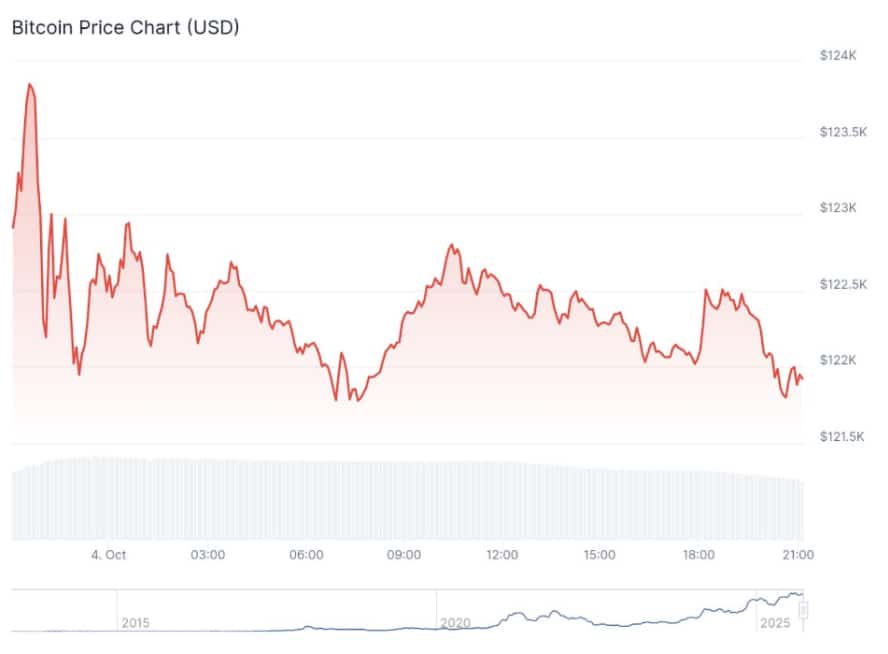
(Source: Coingecko)
Could a New 'Stimmy' Rally Propel Crypto Markets Higher?
The robust performance of U.S. spot Bitcoin ETFs, as highlighted by Farside Investors data, with $985.1 million in net inflows on October 3rd—led by BlackRock’s IBIT ($791.6 million) and Fidelity’s FBTC ($69.6 million)—underscores a strong institutional and retail appetite. This weekly inflow trajectory is on pace to be among the largest recorded in 2025, signaling growing confidence in Bitcoin as an investable asset.
If the proposed rebate checks of $1,000-$2,000 per person are indeed enacted, the situation could draw parallels to the "stimmy" payments distributed during 2020-2021. Those earlier stimulus packages notably coincided with a dramatic surge in cryptocurrency adoption and price appreciation, as individuals allocated a portion of their checks to digital assets. The question remains whether history would rhyme or repeat in 2025.
Distinguishing the Current Economic Environment
However, it is essential to acknowledge that the current economic landscape differs significantly from that of 2020-2021. Although the prospect of direct payments is similar, the underlying conditions are distinct. Inflationary pressures, partly exacerbated by tariffs, continue to ripple through global supply chains. Furthermore, the Federal Reserve is navigating an environment where it is considering rate reductions amidst clear indications of a late-cycle economic slowdown. This nuanced backdrop means any potential "stimmy" rally would occur under different, perhaps more complex, circumstances.
The CME FedWatch Tool currently indicates a high probability of a rate cut at the October 29th Federal Reserve meeting. Such a monetary policy adjustment would typically foster a more aggressive pro-risk positioning among investors, potentially benefiting both equities and the broader cryptocurrency market. This adds another layer of potential impetus to asset prices, independent of the direct fiscal stimulus proposal.
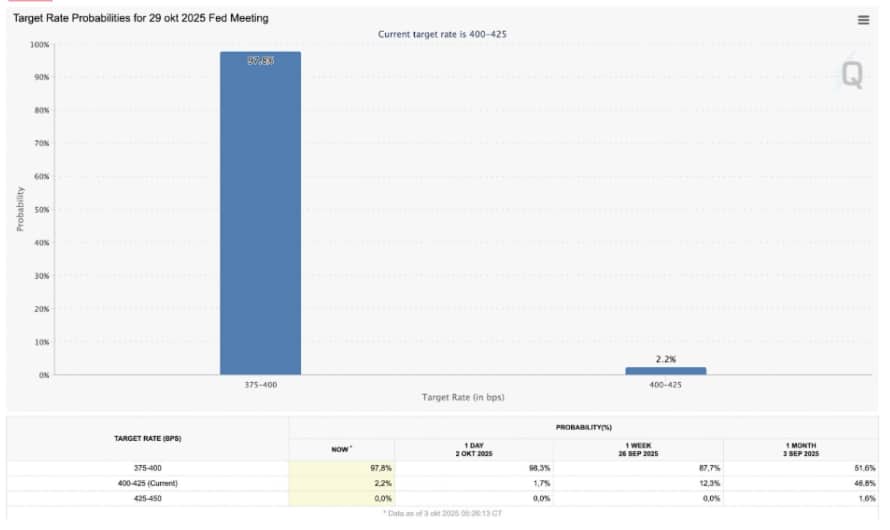
(Source: CME FedWatch)
Outlook for Q4 2025: Awaiting Clarity
Investors, analysts, and cryptocurrency enthusiasts are keenly awaiting a formal policy proposal or a draft bill that would provide explicit details on the mechanics of these rebates. Crucial information such as eligibility criteria, the exact timing of distribution, and the precise funding methodology will be vital in assessing the true impact. With a significant Federal Reserve decision looming later this month, coupled with persistently strong ETF inflows, the market is poised. The coming weeks will reveal whether the "stimmy" narrative transforms into a durable catalyst for robust growth in crypto markets throughout Q4, or if it merely leads to a transient, short-lived price appreciation.


