
Trump's Loan Forgiveness U-Turn: Relief for Millions in 2025
%20announcing%20the%20student%20loan%20forgiveness%20policy%20reversal.%20They%20are%20smiling%20and%20shaking%20hands%20or%20embracing%2C%20conveying%20a%20sense%20of%20agreement%20or%20shared%20success.%20A%20banner%20or%20digital%20display%20in%20the%20background%20subtly%20references%20%22Student%20Loan%20Forgiveness%22%20or%20%22Debt%20Relief%202025.%22%20The%20lighting%20is%20professional%20and%20highlights%20the%20key%20figures.?width=768&height=768&seed=564733&nologo=true)
In a significant and widely unanticipated policy shift, the Trump administration has announced the reinstatement of student loan forgiveness for millions of Americans. This reversal comes after months of intense political gridlock and legal challenges, marking a crucial moment for federal student loan borrowers.
Understanding the Policy Reversal
For those navigating federal student loan obligations under income-driven repayment (IDR) plans, the news signals a long-awaited reprieve. A landmark legal agreement between the American Federation of Teachers (AFT) and the U.S. Department of Education (ED), operating under the Trump administration, has effectively reopened pathways to debt cancellation. This agreement particularly benefits borrowers enrolled in two key programs: the Income-Contingent Repayment (ICR) and the Pay As You Earn (PAYE) plans. Under the new terms, eligible borrowers will once again qualify for loan cancellation upon meeting their payment requirements, crucially, without the burden of unexpected federal tax liabilities.
Earlier in 2025, the Trump administration had paused the processing of forgiveness applications across several income-driven repayment programs. This decision was primarily attributed to perceived legal ambiguities surrounding the Biden-era Saving on a Valuable Education (SAVE) plan and a subsequent court order challenging its implementation. The pause plunged countless borrowers into uncertainty, effectively blocking access to relief they had been anticipating for years.
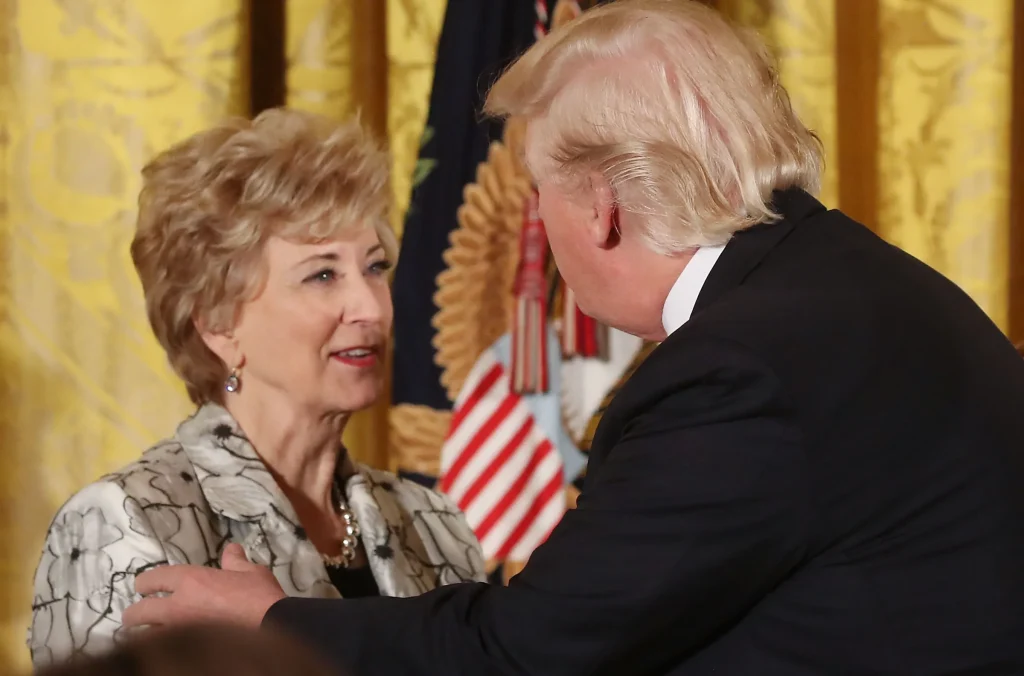
Donald Trump and Education Secretary Linda McMahon embrace on stage after announcing the renewed student loan forgiveness deal.
The American Federation of Teachers' Intervention
The AFT, representing approximately 1.8 million members, took decisive action by filing a lawsuit against the administration. The union contended that officials were infringing upon borrowers' rights by obstructing access to legally mandated debt relief programs. The recent agreement, finalized in October 2025, sees the Department of Education committing to several critical actions:
- Cancelling loans for eligible borrowers enrolled in ICR, PAYE, and other IDR programs.
- Refunding payments made by borrowers beyond their eligibility dates.
- Ensuring that all qualified borrowers in 2025 will not incur federal taxation on the forgiven amount.
According to higher education expert Mark Kantrowitz, over 2.5 million borrowers are currently participating in either the ICR or PAYE plans. For these individuals, many of whom have diligently made payments for 20 to 25 years, this agreement signifies a monumental shift and the long-awaited fulfillment of a promise.
Impact and Implications for Borrowers
For those enrolled in ICR or PAYE, this agreement means that student loan forgiveness will now proceed, provided all eligibility criteria are met—typically 20 or 25 years of qualifying payments based on income and household size. A crucial aspect of the negotiated deal is the assurance that if loans are forgiven in 2025, the remaining balance will not be classified as taxable income for federal tax purposes, offering significant financial protection.
Furthermore, borrowers who continued to make payments during the period of paused forgiveness may be entitled to refunds. The Department of Education is now obligated to identify and process these cases, providing much-needed relief to those affected by administrative delays. A key aspect providing an additional layer of assurance is that the Department's actions will now be subject to court supervision. This oversight mechanism is designed to ensure the agency adheres strictly to its legal obligations, a point that borrower advocates have consistently emphasized.
A notepad marked “Student Loan Repayment” with a calculator and cash on a desk represents the renewed focus on tackling student debt under the latest policy shift.
The Road to Reversal: Pause, Lawsuit, and Tax Considerations
The initial student loan forgiveness pause commenced earlier in 2025 when the Trump administration's Education Department asserted that a federal court ruling against the SAVE plan also extended to older income-driven repayment plans such as ICR and PAYE. This interpretation generated considerable controversy, with many advocates arguing it exceeded the court's original scope.
In March 2025, the AFT formally initiated its lawsuit, contending that the administration's actions violated the statutory rights of federal borrowers by suspending access to relief programs that were in place when they first obtained their loans. The legal challenge rapidly gained momentum as numerous borrowers discovered their forgiveness applications had been frozen indefinitely.
Another critical concern was the impending expiration of the American Rescue Plan Act’s provision for tax-exempt student debt forgiveness. This legislation had rendered forgiven student loans tax-free until December 31, 2025, after which borrowers could potentially face substantial tax liabilities, colloquially known as a “tax bomb.” The recent agreement explicitly shields those qualifying in 2025 from federal taxation, thereby preventing borrowers from being penalized for delays stemming from policy disputes.
Essential Steps for Borrowers
For borrowers, the immediate priority is to confirm their current repayment plan. If enrolled in ICR or PAYE, verifying that one's payment history aligns with the qualifying period for forgiveness is crucial. Borrowers should remain vigilant for official communications from their loan servicer or the Department of Education, as updates regarding eligibility, potential refunds, or processing timelines will be disseminated through these channels.
Should a borrower believe they are eligible for forgiveness but have not received it, contacting their servicer promptly is advisable. Under the terms of the new agreement, certain individuals may be entitled to a refund for payments made subsequent to their eligibility date. It is also strongly recommended that borrowers maintain meticulous records, including payment histories, income certifications, and all correspondence with their servicer, as these documents could prove vital in resolving any future disputes.
Finally, it is important to note the broader policy trajectory. Both ICR and PAYE are slated for gradual discontinuation by July 1, 2028, under President Trump’s proposed “Big, Beautiful Bill.” This timeline underscores the urgency for current enrollees to act swiftly and ensure they capitalize on these programs before they are phased out.
Why This Policy Pivot Matters
This agreement represents a profound policy reversal for an administration that, just months prior, had paused numerous forgiveness initiatives. By re-committing to loan cancellation and instituting protections against tax penalties, the Trump administration has executed a dramatic U-turn that could significantly restore public trust in federal student loan programs.
Despite this positive development, challenges persist. The settlement requires court approval, and the Department of Education faces a substantial backlog in processing applications. Furthermore, without a congressional extension of the tax exemption beyond 2025, borrowers who qualify for forgiveness after this deadline may once again confront taxation on their forgiven balances.
Nevertheless, for millions of borrowers, this decision represents the first concrete step towards substantial financial relief after years of prolonged uncertainty and policy fluctuations.


