
Alexandr Wang: The 28-Year-Old AI Billionaire Leading Meta's Future

Alexandr Wang: The 28-Year-Old AI Billionaire Leading Meta's Future
In a significant strategic maneuver that has reverberated throughout Silicon Valley, Mark Zuckerberg has recently appointed Alexandr Wang, a 28-year-old artificial intelligence (AI) prodigy, to spearhead Meta’s ambitious Superintelligence Labs. This move signals a profound shift in Meta's corporate strategy, underscoring its commitment to becoming a dominant force in the rapidly evolving AI landscape. Reports indicate that this groundbreaking partnership involved a staggering $14 billion investment, integrating Wang’s pioneering startup, Scale AI, directly into Meta’s operational framework.
Zuckerberg is making an unprecedented financial commitment to this venture, pledging approximately $600 billion over the next three years towards the development of the world’s most sophisticated artificial intelligence systems. Alexandr Wang, already recognized as the youngest self-made billionaire within the AI sector, is widely regarded as the pivotal figure capable of unlocking Meta’s next era of technological advancement and securing its position at the forefront of AI innovation.
From MIT Dropout to Billionaire Founder: The Genesis of Scale AI
Alexandr Wang's journey is a compelling narrative that epitomizes the entrepreneurial spirit of Silicon Valley. Born to Chinese immigrant physicists who contributed to the distinguished Los Alamos National Laboratory, Wang's early life was immersed in an environment that fostered scientific inquiry, intellectual curiosity, and an unwavering drive for achievement. His precocious talent led him to MIT, but at the remarkably young age of 19, he chose to depart from his academic pursuits to co-found Scale AI. This startup rapidly emerged as a foundational enterprise, providing crucial data infrastructure that would underpin the nascent AI revolution.
Working in close collaboration with co-founder Lucy Guo, Wang meticulously built Scale AI from its nascent stages. Their early days were characterized by the typical grit of startup culture: sleeping on air mattresses, navigating the intense demands of accelerator programs, and tirelessly working on labeling vast and complex datasets. These meticulously processed datasets would subsequently serve as the fundamental training material for advanced AI systems utilized by industry giants such as Nvidia, Amazon, and OpenAI.
By 2024, Scale AI had ascended to a valuation of an impressive $14 billion. This valuation strikingly mirrors the reported sum Meta invested to acquire the company and integrate its innovative capabilities into the newly formed Superintelligence Labs, marking a monumental acquisition in the tech industry.
Zuckerberg’s $14 Billion Bet on Superintelligence: Meta’s AI Moonshot
Meta’s establishment of the Superintelligence Labs is widely characterized as Zuckerberg’s bold "moonshot," an audacious attempt to ensure that Meta not only keeps pace but also asserts leadership in the escalating AI arms race. The competition is fierce, featuring formidable players such as OpenAI, Anthropic, Google DeepMind, and Elon Musk’s xAI. Zuckerberg’s intent is clear: to prevent Meta from being outmaneuvered in this critical technological frontier.
During a recent podcast appearance, Zuckerberg articulated his strategic philosophy, stating that he would rather "risk misspending a couple hundred billion dollars" than risk falling behind in the AI development cycle. He underscored the profound significance of artificial superintelligence, proclaiming it to be "the most important technology of our lifetimes." For Zuckerberg, the principal risk is not excessive investment, but rather a lack of speed and agility in pursuing this transformative technology.
In alignment with this vision, Meta has committed an estimated $600 billion through 2028, earmarked for the construction of advanced data centers, enhancing compute power, and bolstering its overall AI infrastructure. Alexandr Wang has been entrusted with the immense responsibility of overseeing this entire initiative, spanning from foundational research and product design to the underlying infrastructure, reporting directly to Zuckerberg himself.
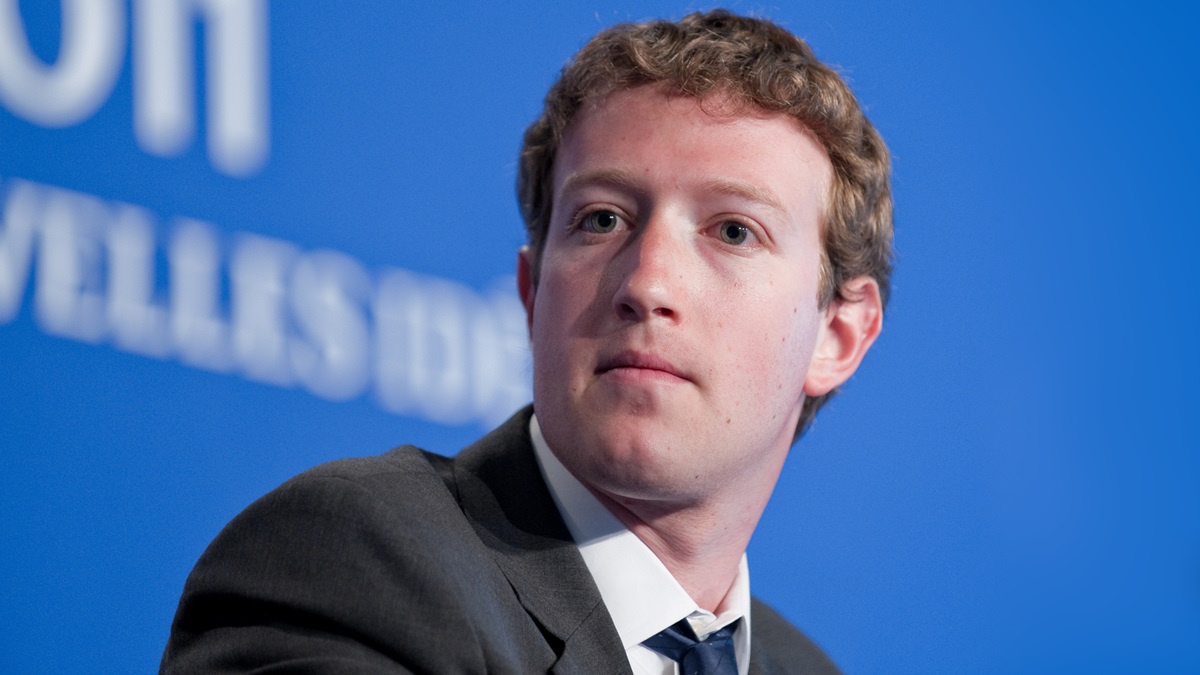
Meta CEO Mark Zuckerberg has committed significant capital, tapping Alexandr Wang to lead the company’s new Superintelligence Labs amidst its expansive AI initiatives.
Inside Meta’s Superintelligence Labs: A Restructured AI Vision
Since his integration into Meta earlier this year, Alexandr Wang has undertaken a comprehensive restructuring of the company’s diverse AI divisions. This strategic reorganization has resulted in the consolidation of Meta’s AI efforts into four distinct and interconnected core units, each focused on a critical aspect of artificial intelligence development:
- Frontier Research: Dedicated to exploring advanced reasoning capabilities and pushing the boundaries of AI model scaling.
- Applied AI: Concentrating on the development of consumer-facing products, including sophisticated chatbots and augmented reality (AR) glasses, designed to enhance user experience.
- Infrastructure: Responsible for managing the essential compute resources, data centers, and advanced model training platforms that power Meta's AI ambitions.
- AI Safety and Governance: Tasked with ensuring the ethical, secure, and responsible development and deployment of AI technologies.
In an internal memorandum, portions of which were reviewed by Bloomberg, Wang articulated his perspective on the impending era of superintelligence: "Superintelligence is coming — and in order to take it seriously, we need sharper focus on the areas that will be critical to reach it." This statement encapsulates the urgent and focused approach Meta is now adopting under Wang's leadership.
The Zuckerberg–Wang Partnership: Silicon Valley’s New Power Duo
Wang’s arrival at Meta signifies a rare generational transition within the upper echelons of Silicon Valley leadership. Mark Zuckerberg, now 41, appears to have identified in Wang a visionary technologist akin to his own younger self, albeit operating in an environment where the stakes for technological dominance are considerably higher. This partnership aims to combine Zuckerberg’s strategic foresight with Wang's deep technical expertise and entrepreneurial drive.
At Meta Connect 2025, Zuckerberg showcased the company’s AI-enabled Ray-Ban glasses, a demonstration that, despite some technical glitches and awkward off-script moments, subtly conveyed a larger strategic pivot. The overarching message from the event was clear: Meta’s long-term trajectory is shifting decisively from its foundational social media offerings towards the ambitious pursuit of superintelligence.
"AI should serve people — not just sit in data centers automating large parts of society," Zuckerberg conveyed to the audience. "We’re building technology that gets out of the way and makes life easier." This philosophical stance underscores Meta’s intent to develop AI that is seamlessly integrated into daily life, providing practical benefits. Alexandr Wang is now the pivotal figure tasked with transforming this expansive vision into a tangible reality.
What Is Scale AI — and Why Does It Matter?
Alexandr Wang’s company, Scale AI, forged its formidable reputation by performing the foundational, often labor-intensive, data labeling work that many advanced AI research labs preferred to outsource. This specialized "data infrastructure" became an indispensable component for effectively training sophisticated large language models and other AI systems, including prominent ones like GPT, Claude, and Gemini.
Scale AI leveraged a global network of thousands of gig workers, operating through platforms such as Outlier and Remotasks. These workers diligently processed immense volumes of diverse data—encompassing text, imagery, and sensor outputs. The meticulous annotation and categorization of this data were instrumental in enhancing the intelligence, accuracy, and operational speed of AI systems across various applications.
Essentially, Wang astutely recognized and addressed the fundamental "plumbing" requirements of the burgeoning AI revolution well before many of his contemporaries, positioning Scale AI as a critical enabler of subsequent AI breakthroughs.
Can Meta Catch Up to OpenAI and Anthropic? The Race to AGI
Mark Zuckerberg firmly believes that Meta possesses the capability to not only catch up but also potentially surpass its rivals in the AI domain, and Alexandr Wang is central to this conviction. Meta’s ambitious internal objective is to develop a system capable of achieving "artificial general intelligence" (AGI) within the next decade—a monumental undertaking that signifies intelligence on par with, or exceeding, human cognitive abilities across a broad range of tasks.
However, a degree of skepticism persists within the tech community. AI demonstrations, even those presented at high-profile Meta events, have occasionally been marred by technical glitches. Zuckerberg’s widely reported issues with the Ray-Ban demo represent a recent example in a series of highly publicized AI missteps observed across Silicon Valley. These instances highlight the formidable challenges inherent in developing and deploying cutting-edge AI technologies.
Despite these challenges, Wang’s proven track record in meticulously scaling complex data operations and constructing robust, high-performance AI pipelines makes him exceptionally qualified to lead what Zuckerberg has emphatically termed "the race to superintelligence." His expertise is seen as crucial for navigating the technical complexities and operational demands of this ambitious endeavor.
The $14 Billion Question: Can Wang Deliver Meta’s Superintelligence Vision?
At the young age of 28, Alexandr Wang now presides over one of the most formidable AI research and development teams globally. The challenge confronting him is monumental: to successfully transform Meta from its historical roots as a social network behemoth into a pioneering frontier AI powerhouse. This transformation must be executed with unparalleled speed and precision, ideally before competitors like OpenAI or Google achieve similar milestones.
For Mark Zuckerberg, this mission transcends mere business strategy; it is an existential imperative for Meta’s future relevance and leadership in the tech industry. For Alexandr Wang, the task is deeply personal, driven by a profound conviction in the transformative potential of artificial intelligence.
As Wang articulated in his internal memo, "Superintelligence isn’t just the next step in AI. It’s the next chapter of humanity." This powerful statement encapsulates the magnitude of the endeavor and the visionary perspective that guides Meta’s aggressive pursuit of superintelligence under Wang's leadership.


