
Private Student Loans: Navigating the Advantages and Risks


Navigating the complex world of student loans can be daunting, especially when federal financial aid doesn't fully cover tuition and living costs.
While federal student loans are typically the primary choice for most students, private student loans have gained traction due to their flexibility and often higher borrowing limits. However, these private options come with distinct risks that prospective borrowers must thoroughly understand before committing. This guide aims to provide a comprehensive overview of private student loans, highlighting their advantages, limitations, and how to determine if they are the right financial solution for your educational journey.
What Exactly Is a Private Student Loan?
A private student loan is a financial product offered by institutions such as banks, credit unions, or other private lenders. Its purpose is to assist students in covering higher education expenses that extend beyond what federal loans and grants can provide. Unlike federal loans, private loans are not backed by the U.S. government. This crucial difference means that their terms, interest rates, and repayment options can vary significantly, depending on the specific lender and the borrower's creditworthiness, as detailed by Bankrate.
These loans can cover a wide range of educational costs, including tuition fees, housing, textbooks, and other essential expenses. This makes them an attractive option for students attending more expensive institutions or those who have already reached the maximum limits for federal loans. Nevertheless, borrowers are strongly advised to meticulously evaluate the loan terms and fully grasp the potential long-term implications on their repayment capabilities and overall financial stability.
Advantages of Private Student Loans
Higher Borrowing Limits
Federal student loans come with stringent annual and lifetime borrowing caps. For undergraduates, these limits typically range from $5,500 to $12,500 per year, depending on their academic year and dependency status, with a lifetime maximum of $31,000 for dependent students and $57,500 for independent students. Private lenders, conversely, often permit borrowing up to the total cost of attendance, after deducting any other financial aid received. This provides students with the capacity to fund their education at costly institutions without facing significant financial gaps.
Potentially Competitive Interest Rates
Students who possess strong credit scores and a stable income—or those with a qualified cosigner—may discover private loan options with interest rates that are lower than those offered on federal graduate or parent PLUS loans. Annual Percentage Rates (APRs) for private loans can sometimes start below 4 percent, presenting substantial long-term savings for eligible borrowers who qualify for such favorable terms.
Expedited Application and Funding Process
Private lenders typically offer a streamlined online application experience that demands minimal documentation and can disburse funds within a matter of days. This swiftness contrasts sharply with federal loans, which necessitate the completion of the Free Application for Federal Student Aid (FAFSA) and involve a waiting period for processing. While completing the FAFSA remains crucial for determining eligibility for grants and other federal aid, private loans can efficiently bridge urgent funding shortages, as noted by U.S. News.
Accessibility for Those Ineligible for Federal Loans
Private loans can be a viable solution for students who do not meet the eligibility criteria for federal loans. This includes international students who can secure a U.S. cosigner, or borrowers who have already exhausted their federal loan limits, according to Edvisors. Private lenders focus their evaluation on creditworthiness and income rather than federal guidelines, thereby enabling a broader spectrum of students to secure the necessary financing for their education.
Potential Tax Benefits
The interest paid on private student loans may be tax-deductible, similar to that of federal loans. Borrowers can potentially deduct up to $2,500 in interest annually, provided they satisfy the eligibility criteria set by the IRS. Lenders usually furnish a 1098-E form, which indicates the total interest paid for tax reporting purposes.
Unique Lender Perks and Incentives
Some private lenders offer attractive incentives, such as discounts for setting up automatic payments, scholarship opportunities, or principal reduction programs for borrowers who fulfill specific conditions. While these perks can vary significantly among lenders, they can add considerable value beyond the standard loan terms, enhancing the overall appeal of private financing options.
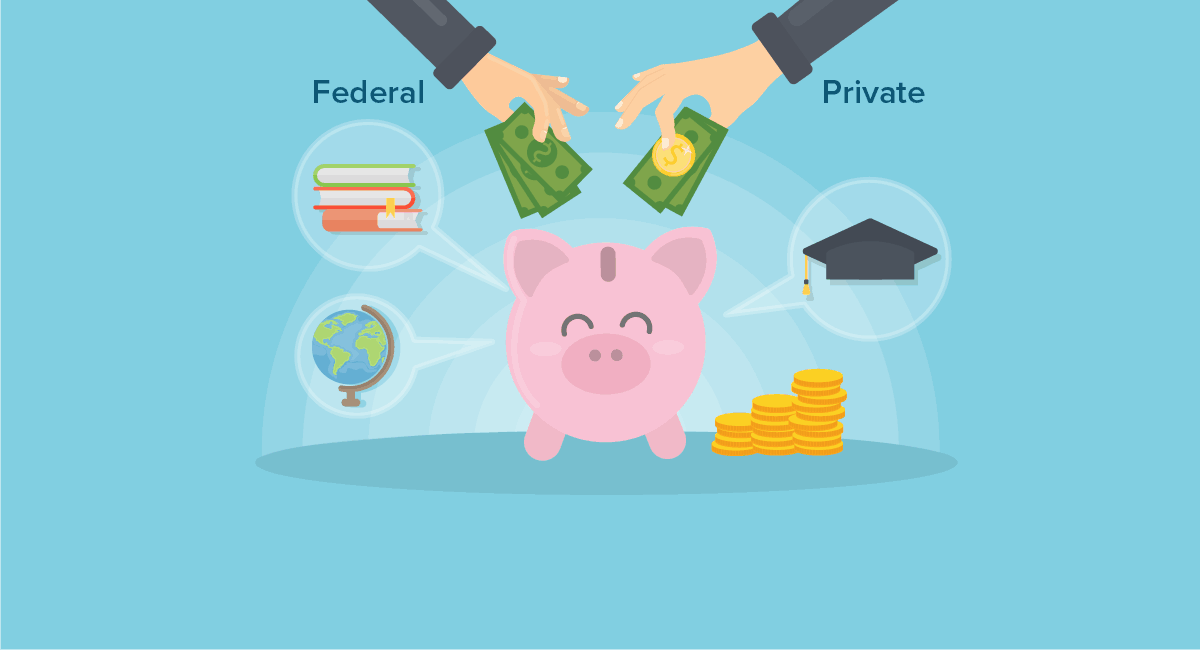
Fun illustration comparing federal and private student loans, highlighting how each option impacts borrowing and savings.
Disadvantages of Private Student Loans
No Access to Federal Repayment Plans or Forgiveness Programs
A significant drawback of private loans is the absence of federal benefits like income-driven repayment plans or Public Service Loan Forgiveness. Borrowers are generally required to meet their monthly payment obligations regardless of changes in their income, which can pose a considerable challenge for individuals pursuing careers in lower-paying public service or non-profit sectors.
Interest Rates Dependent on Creditworthiness
Unlike federal loans, the interest rates for private loans fluctuate based on the credit scores, income, and existing debt levels of both the borrower and any cosigner. While some borrowers may secure advantageous lower rates, others might face substantially higher interest rates, particularly if they opt for variable-rate loans that are subject to market condition changes.
Lack of Federal Subsidy
Federal subsidized loans prevent interest from accruing while students are enrolled in school or during approved deferment periods. Private loans, however, do not offer this benefit. Interest begins to accrue from the moment the loan is disbursed, potentially increasing the total cost of the loan if repayment does not commence immediately after graduation.
Limited Deferment and Forbearance Options
Private lenders typically provide fewer options for temporarily pausing loan payments. Deferment or forbearance programs are usually at the discretion of individual lender policies and might not be guaranteed during periods of financial hardship, offering less flexibility than federal alternatives.
Risk of Overborrowing
Since private loans can cover up to the full cost of attendance, there is an inherent risk that borrowers might take on more debt than is truly necessary. This can lead to higher monthly payments and extended repayment periods, potentially having a significant negative impact on long-term financial health and stability.
Debt Persistence After Death or Default
A crucial distinction from federal loans is that private loans are generally not discharged upon a borrower's death. Instead, the outstanding debt may still be owed by the borrower’s estate or by any cosigner. This can create lasting financial burdens for families if a borrower passes away before the debt is fully repaid, highlighting a significant risk.
Comparing Private and Federal Loans
For the majority of students, federal student loans remain the preferred option due to their inherent protections, including forgiveness programs, income-driven repayment schemes, and government subsidies. Private loans are often considered a supplementary resource, utilized to bridge funding gaps when federal aid proves insufficient, or when a student seeks expedited processing times or potentially lower interest rates based on strong credit. It is imperative that borrowers thoroughly evaluate their eligibility, current interest rates, repayment terms, and the long-term affordability of private financing before making a definitive decision.
Common Questions About Private Student Loans
Can I refinance a private student loan?
Yes, refinancing can be a strategic move to potentially lower interest rates or adjust repayment terms to better suit your financial situation. However, borrowers should carefully consider the potential loss of any unique benefits provided by their original lender, such as specific repayment options or other perks, before committing to a refinance.
Are private student loans suitable for international students?
Private loans frequently accommodate international students, especially if they are able to secure a U.S. citizen or permanent resident as a cosigner. This is a crucial distinction, as federal loans are typically not available to non-citizens.
Do private loans affect credit differently than federal loans?
Both types of loans will impact your credit score. However, the impact of private loans is entirely dependent on your repayment behavior. Missed payments or defaults on private loans can more directly and severely affect a borrower's credit score due to the stricter enforcement policies common among private lenders.
Is it better to choose private loans over federal loans?
The choice between private and federal loans largely depends on individual financial needs and credit history. Federal loans generally offer more comprehensive protections and flexible repayment options. In contrast, private loans may provide higher borrowing limits and faster access to funds for individuals with excellent credit scores and a reliable financial background.
Can private student loans be forgiven?
Typically, private student loans do not qualify for federal loan forgiveness programs. While some private lenders might offer specific programs under very limited and exceptional circumstances, these are rare and not guaranteed, unlike federal forgiveness options.
Conclusion
Private student loans can indeed serve as a valuable financial tool for students seeking to finance their higher education beyond the limits imposed by federal loan programs. They offer distinct advantages such as higher borrowing amounts, potentially competitive interest rates for well-qualified borrowers, and more rapid application and funding processes.
However, these appealing benefits are accompanied by significant trade-offs. These include a higher inherent repayment risk, more limited deferment options compared to federal loans, and the complete absence of the robust federal loan protections. Therefore, for any student considering private loans, meticulous planning, a thorough understanding of all terms and conditions, and a comprehensive exploration of all available federal aid options are absolutely critical to making a truly informed and financially sound decision for their future.


